
Its production declined for the third consecutive year in financial year 2020-21 (FY21) to an 11-year low, while sales volume contracted for the second year to the lowest since FY15. The company manufactured around 1.08 million vehicles last fiscal, a decline from 1.17 million the previous year, and a steeper fall from its all-time high tally of 1.62 million reported in FY18.

After outperforming the broader market and their public sector peers for the better part of the post-Lehman period, private sector banks - such as HDFC Bank, ICICI Bank, Axis Bank, and Kotak Mahindra Bank - are now underperforming. Last week, the Nifty Private Bank index was up just 6 per cent year-to-date in the calendar year 2021, against nearly 13 per cent rally in the Bank Nifty and a 15 per cent rise in the benchmark Nifty50. Public sector (PSU) banks, such as State bank of India, Bank of Baroda, and Punjab National Bank, are now rally leaders and outperforming the broader market. The Nifty PSU Bank index was up 42 per cent since the beginning of this calendar year. But on a longer term, the Nifty Private Bank index is up 101 per cent since March 2016, against a 118 per cent rally in the Bank Nifty and just 2 per cent rise in the Nifty PSU Bank index in the period.

The Reserve Bank of India (RBI) on Wednesday gave banks time till October 31 to comply with its guidelines on current account and overdraft facilities. The central bank indicated that it was in no mood to change the proposed rules, but would only allow for stretching the timeline for smoother implementation. The initial deadline had ended on July 31, leading to thousands of current accounts being closed or frozen by banks. Lenders had requested the RBI for some more time to resolve the operational issues in implementing the provisions of the August 2020 circular in letter and spirit.

The Reserve Bank of India (RBI) on Wednesday allowed payment system providers, prepaid card issuers, card networks and white label ATM operators access to its Centralised Payment Systems (CPS), such as real time gross settlement (RTGS) and National Electronic Fund Transfer (NEFT) systems in the first phase of its plan bring non-banks in the same platform. "Direct access for non-banks to CPS lowers the overall risk in the payments ecosystem.

The market's sensitivity to the US Fed's balance sheet changes makes it vulnerable to the possible tapering of the bond buying programme and the resulting stagnation or even shrinkage in the balance sheet.

Top companies have grabbed a bigger pie of their sectors in the pandemic period, leading to a further rise in market concentration in many industries as measured by the Herfindahl-Hirschman Index (HHI). The HHI score, which indicates competitive intensity in an industry (or a lack of it), reached a new high in FY21 as bigger firms raised their revenue market shares either organically or through mergers and acquisitions. A higher HHI score indicates a rise in market concentration in favour of a few firms while a lower score means that the industry's revenue is more evenly divided among many companies

State Bank of India, HDFC Bank, Kotak Mahindra Bank, and IDFC Bank have filed a petition against the notice, in a last-ditch attempt by the banking system to keep the information confidential. The notice was given to the lenders under Section 11(1) of the RTI Act, seeking third-party disclosure requirements. While the apex court's original directive in 2015 applied to the full report, it was subsequently agreed that not the entire report but only relevant portions, such as those on bad debts and borrowers, would be made public.

'We are very watchful about inflation and growth. But the main challenge is economic revival and growth.'
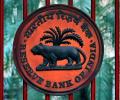
'A strong foreign exchange reserve is the best safety net against global spillovers.'

The rally in mid- and small-cap stocks has spilled over into the IT sector as well. Second and third-tier IT stocks, which historically traded at a discount to the big five IT companies, are now trading at nearly 25 per cent premium to their large-cap peers. The smaller IT companies have a price-to-earnings (P/E) multiple of nearly 38 times against the big five's current P/E multiple of around 31x.

Mobile operators with the exception of Reliance Jio are in a much worse financial condition than expected earlier. The combined borrowing of the four incumbent operators - Bharti Airtel, Vodafone Idea, Bharat Sanchar Nigam (BSNL), and Mahanagar Telephone Nigam (MTNL) - reached an all-time high of Rs 3.85 trillion at the end of March this year. The companies' combined debt was up 22.4 per cent year-on-year last financial year against 8.3 per cent growth in their borrowing in the previous year. As a result, the incumbent operators' debt-equity ratio shot up to an unsustainably high level of 6.83X at the end of March this year from 2.3X at the end of March 2020. This was largely due to big losses reported by all these companies last financial year. The four incumbent operators racked up combined net losses of Rs 70,000 crore in FY21.


High inflation print is the price that the Reserve Bank of India (RBI) will have to pay to nurse a fragile growth back, say economists. Wholesale Price Index-based inflation rose to a record high of 12.94 per cent in May, aided by low base effect, but also because of higher fuel and commodity prices. Retail inflation, too, surprised by rising to 6.30 per cent, while the core inflation, which is the non-food and non-fuel component, rose to an 83-month high of 6.55 per cent. These numbers are much above RBI's upper limit of 6 per cent inflation target, but there is very little that the RBI can do at this moment.

The 14 listed Tata group companies in which Tata Sons holds a stake are paying out a record Rs 35,441 crore to their shareholders by way of dividends and share buyback for FY21.
The Reserve Bank of India (RBI) booked massive gains on its foreign currency sales and needed to provide much lesser for its reserves in 2020-21 (FY21), helping it to carve out a significant Rs 99,122-crore dividend for the government, revealed the RBI's annual report for FY21. By doing so, the central bank's risk buffers have reduced to the bare minimum, which may restrict some of RBI's scale of operations, and would likely hamper dividend payout for financial year 2021-22, said analysts. The annual accounts are for nine months ended March 31, 2021 since the RBI changed its accounting year from July-June to April-March from FY21.

Smaller stocks continue to shine at the bourses. The BSE MidCap index is up 18 per cent since the beginning of January this year against a 5 per cent rise in the Sensex during the period. With the current rally, the mid-cap index has doubled in value since the end of March 2020 against a 70 per cent rally in the Sensex during the period. On Tuesday, the mid-cap index closed at 21,232, as compared to 17,941 at the end of December 2020. In the same period, the benchmark index moved from 47,751 to 50,193.

India's top IT companies have shown a hiatus between their performance on the bourses in the pandemic period and earnings growth. The combined market cap of the top five IT companies - Tata Consultancy Services, Infosys, Wipro, HCL Technologies, and Tech Mahindra - is up 87 per cent since the end of March 2020. In comparison, the benchmark BSE Sensex is up 68 per cent during the period. So the industry beat the broader market by a big margin in the last one year.

The combined dividend payout by early-bird companies -- those that have declared their results for FY21 -- is up 8.9 per cent, lower than the 21.9 per cent rise in in FY20 but ahead of the underlying growth in India Inc business last year. Combined net sales of these early birds were down 1.8 per cent last financial year while net profit was up 27.3 per cent in FY21. Some top companies that have stepped up dividend payout in FY21 include Hindustan Unilever, Indus Towers, Tata Steel, Ultratech Cement, Larsen & Toubro, Dabur, Asian Paints, and UPL. In contrast, banks have skipped dividends under an RBI diktat while companies such as Marico, TCS, Maruti Suzuki, and Godrej Consumer are paying lower dividends for FY21.

Thanks to a continued rise in the market capitalisation of the Adani Group companies, its promoter Gautam Adani is now the second richest Asian and fourteenth richest businessman in the world with a networth of $66.5 billion. Reliance Industries promoter Mukesh Ambani remains the wealthiest businessman in Asia with a networth of around $76.5 billion, according to Bloomberg data. The six Adani Group companies had combined market capitalisation of Rs 8.36 trillion as on Thursday, against Reliance Industries' market capitalisation of Rs 12.6 trillion. Adani Green tops the charts in the group with m-cap with Rs 1.99 trillion.
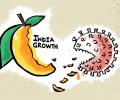
Those hardest hit by the second wave of the pandemic have been blue-collared workers, doctors and healthcare workers, law and order and municipal personnel, individuals eking out daily livelihood, and small businesses. And there should be more measures taken to alleviate their pain, the Reserve Bank of India (RBI) said on Monday. The report also indicated that the RBI's growth numbers might have to be revisited as the central bank's real GDP growth projection of 26.2 per cent given in the MPC's resolution of April 7 for the first quarter of 2021-22, were "made before the full fury of the resurgence." Nevertheless, the "resurgence of COVID-19 has dented but not debilitated economic activity in the first half of Q1: 2021-22.
 © 2025 Rediff.com - Investor Information - Advertise with us - Disclaimer - Privacy Policy - Sitemap - Feedback - About us - Terms of use - Grievances